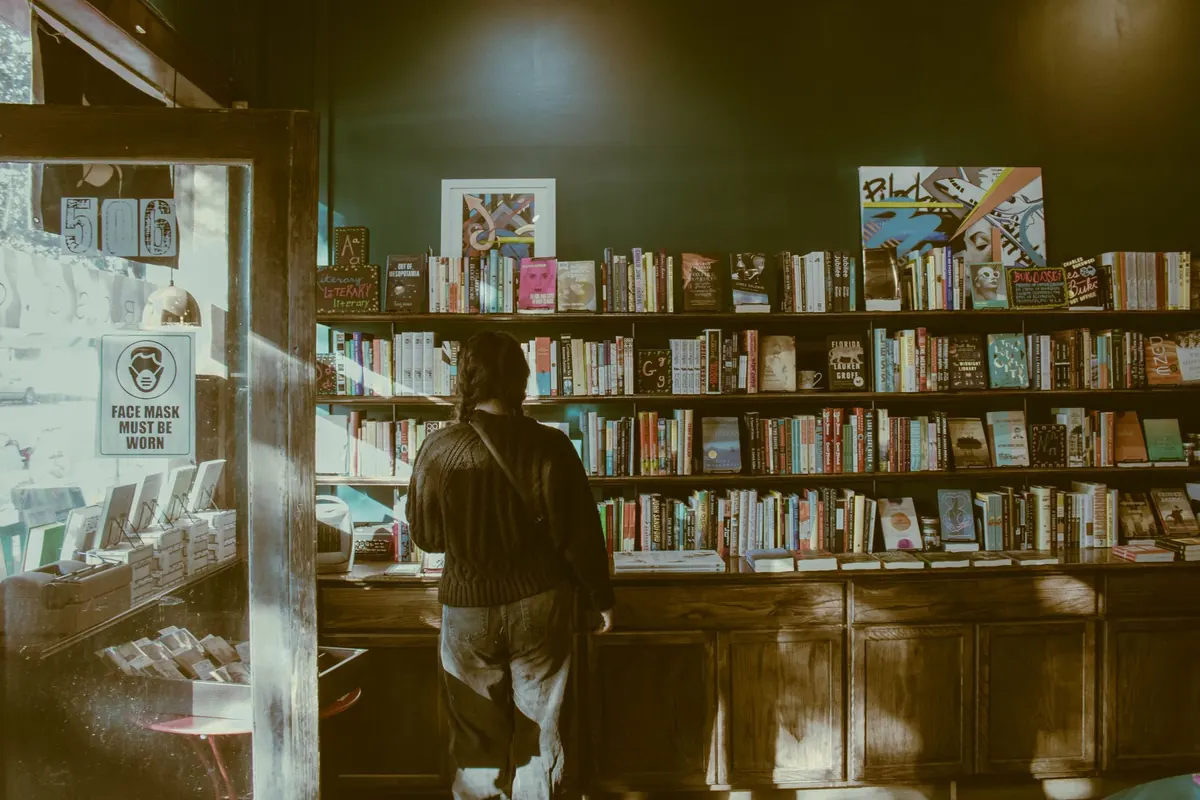
Independent bookshops are not museums of a lost high street. They are working shops, usually run by two or three people who read a great deal, remember what you liked last time, and can find a book from the vaguest description you have ever given anyone. The tricky part is knowing how to use them well — where to look for the good ones, how to ask for a title they do not have on the shelf, and how to keep them going once you have found them.
None of it takes much effort. A few habits, learned once, will make your local shop far more useful than any recommendation algorithm, and it will make the high street worth walking down.
Find the shops that actually exist near you
Start with what you already know. Most market towns and suburbs have at least one independent shop, though it may sit down a side street, above a café, or inside a converted chapel rather than on the main parade. Search for independent bookshops plus your town name, then check the shop's own website rather than a directory listing, which is often years out of date.
Useful places to look:
- The Booksellers Association's bookshop search, which lists member shops across the UK.
- Bookshop.org's map of shops that receive a share of online sales.
- Local Facebook groups, subreddits and community noticeboards, where people ask and answer this question constantly.
- The events pages of your local paper or library — bookshops usually appear there when an author visits.
Cast the net wider than new books. Second-hand shops, specialist dealers in crime, poetry or maps, and the small shops attached to galleries and museums all count. So does the bookshop in a train station or a hospital. Some of the best are in places you would not think to look.
Learn to ask for what you want
The single most useful thing you can bring is an ISBN, the 13-digit number printed above the barcode on the back of a book. It settles any confusion about editions and hardback versus paperback. If you haven't got the book to hand, the publisher's website will list it, and so will most retailers' pages.
If you haven't got the ISBN, describe the book anyway. Booksellers are extremely good at this. Details that help include:
- The author, even if you are unsure of the spelling.
- How long ago you read or saw it, roughly.
- What the cover looked like — colour, image, the shape of the type.
- The plot, or the one scene you remember.
- What it was like to read: funny, sad, translated, set in Wales, written entirely in letters.
Say whether you would accept a different edition. Say whether you need it in time for a birthday. Ask how long an order usually takes and whether the shop wants a deposit, which some do for expensive or unusual titles. Ordering is nearly always free to arrange, and you are not obliged to buy if the answer comes back that the book does not exist.
The titles that need a bit more digging
Out-of-print novels, university press monographs, small-press poetry and books in other languages are where independent shops earn their keep. They can search wholesalers and second-hand networks that are not open to the public, and they can tell you when a book is print-on-demand — that is, printed one copy at a time, which can take a week or two and may not be returnable.
If a search comes up empty, ask what happens next. Some shops will contact the publisher directly for a small-press title. For academic or reference books, your local library may be able to arrange an interlibrary loan, which costs nothing to ask about and often works.
Events, reading groups and the noticeboard by the till
Bookshops live on events, and events live on people turning up. Look for a printed programme by the till, sign up to the shop's newsletter, and follow it on social media if you use it at all — most shops post about author talks, signings, poetry evenings and children's story hours.
A few things that genuinely help:
- Buy the book being discussed, ideally from the shop hosting the event. That is often what makes the evening possible.
- Ask whether the shop runs or hosts a reading group, and whether it offers a small discount on multiple copies.
- Turn up even if you have not finished the book. Nobody checks.
- Offer to help: putting out chairs, carrying boxes, writing a review, telling three friends.
Book tokens, gift cards and small ways to pay it forward
National Book Tokens are accepted in most UK bookshops, including independents, and they keep the choice with the person receiving them rather than with whoever bought the gift. Ask at the counter whether the shop also runs its own credit scheme or a loyalty card; many do, and the terms vary from shop to shop.
Beyond buying books, the useful habits are unglamorous. Buy the occasional birthday present there rather than online. Ask about the shop's own tote bag or its second-hand shelf when a new hardback is out of reach. If you live somewhere without a shop, ordering through Bookshop.org sends a share of the sale to independents. And if a book has been good, tell the person who sold it to you — that conversation is what keeps the shelves interesting.
A simple plan for the next month
- Find your two nearest independent bookshops and note their opening hours.
- Go in with nothing particular in mind and ask for one recommendation.
- Join the newsletter of the one you liked.
- Order one title they do not have in stock — ideally something out of print or from a small press.
- Buy one present there instead of online.
- Keep the receipt in your wallet; you will be back.
That is the whole trick. Independents survive on regulars, not crowds, and a regular is simply someone who came back.
Photo: Mizzu Cho / Pexels