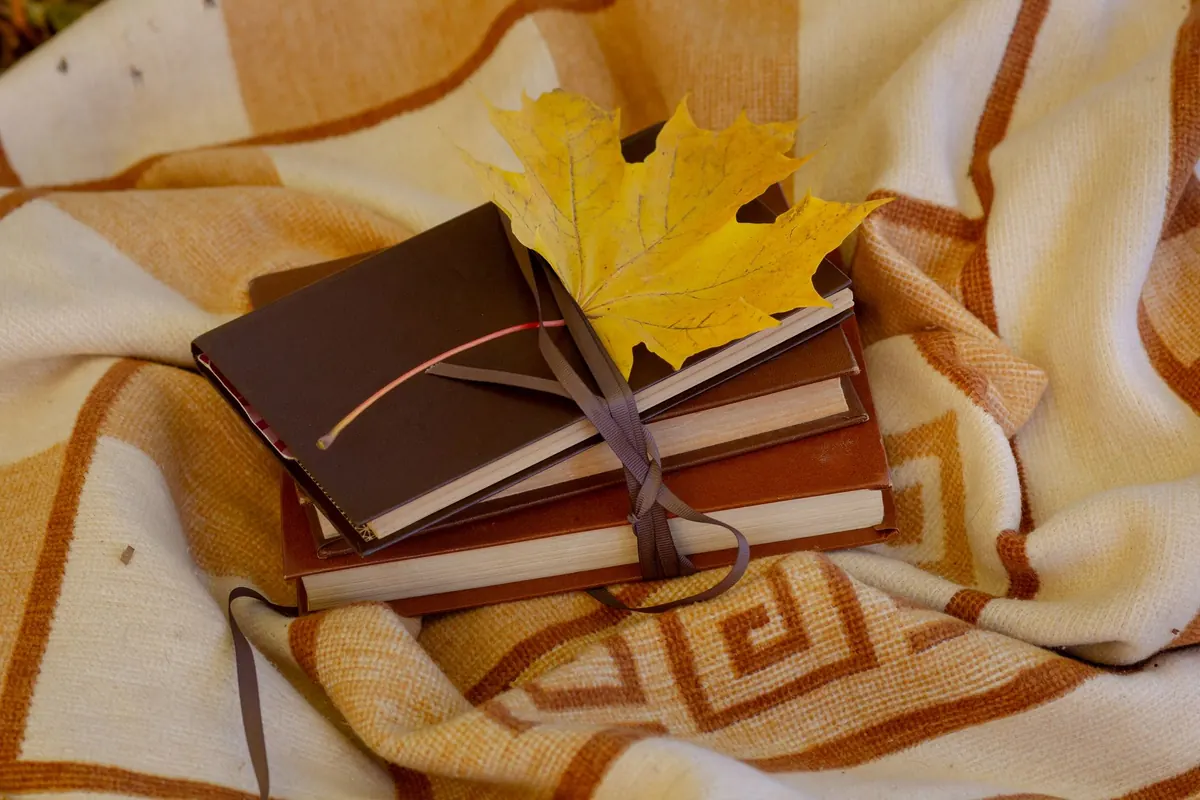
Autumn arrives quietly and then all at once. One evening the light turns amber by half past five, the windows need closing, and whatever you have been carrying around since June feels wrong — too bright, too fast, too eager. This is the season for reading with the lamp on and the kettle within reach, for books that suit the dark rather than fight it.
What follows is not a survey of everything published this year. It is a way of matching a book to the mood of the months, with suggestions in three veins — gothic fiction, comfort reads and nature writing — along with a practical plan for finishing the books you set aside.
Gothic fiction: the season's natural register
Gothic fiction and autumn are old companions. The genre was built on long shadows, half-heard noises and houses that seem to be listening, and a cold evening supplies all three without any effort on your part.
Where to begin
If you have not read much in this vein, start short. Henry James's The Turn of the Screw runs to barely a hundred pages and unsettles you twice over: once as a ghost story, once as an argument about who is telling the truth. Susan Hill's The Woman in Black is a straightforward Victorian-style haunting, best taken in one or two sittings. M. R. James wrote his ghost stories to be read aloud, and they still work that way — a good choice if you share your evenings with someone willing to take turns.
For the darker weeks
As the evenings close in further, move to something with more weight. Dracula is a better autumn book than most readers remember: it is epistolary, so it breaks neatly into nightly chunks, and its letters and diaries suit a season of early nights. Sarah Waters's The Little Stranger is slower and stranger, a post-war country house novel in which the decline of the building and the decline of the family turn out to be the same story. Daphne du Maurier's Rebecca remains the most atmospheric of the lot, and Silvia Moreno-Garcia's Mexican Gothic shows how well the form travels.
One tip: gothic fiction rewards a little ceremony. Read it by lamplight rather than overhead light, leave your phone in another room, and give it an hour rather than twenty minutes. Atmosphere is easier to build when you are not checking the time.
Comfort reads: warmth without saccharine
A comfort read is not the same thing as a cheerful one. What makes a book consoling is reliability — a place you come to know, characters who behave like people, and stakes that matter without becoming unbearable. That is why so many comfort reads are re-reads. You are not waiting to find out what happens; you are visiting.
What tends to work:
- A firm sense of place. A village, a street, a kitchen you can picture without effort.
- Episodic structure. Chapters that stand alone are easier to pick up on a dark Tuesday.
- Kindness without naivety. Difficult things happen, but someone keeps the kettle going.
- Length you can live inside. Long novels suit long evenings better than slim ones do.
Elizabeth Gaskell's Cranford is the model here: short chapters, dry comedy, and a community that looks after itself. Miss Read's village novels offer something similar with even less drama. Jane Austen's Persuasion is the most autumnal of her books, and Rosamunde Pilcher's The Shell Seekers is generous enough to fill a fortnight of cold nights. If you want something shorter, Alexander McCall Smith's Botswana novels are gentle, funny and easy to read one chapter at a time.
Nature writing for a turning season
Autumn is the best time to read about landscape, because the landscape is doing something visible. Trees are changing colour, hedgerows are emptying, and the light shifts week by week.
Nan Shepherd's The Living Mountain is short, precise and worth reading slowly, one section an evening. Robert Macfarlane's The Wild Places travels through Britain's remoter corners in a series of journeys that each suit a different weather. Roger Deakin's Notes from Walnut Tree Farm works especially well in this season: it is arranged in fragments, so you can read two pages and put it down without losing the thread. Kathleen Jamie's Findings and Amy Liptrot's The Outrun both look at nature close to home, and Olivia Laing's To the River is a good companion to a walk along any water you happen to live near.
The practical trick with nature writing is to pair it with being outside. Read a chapter, then walk for twenty minutes with no podcast. Take a notebook and write down three things you noticed. It sounds like homework; it turns reading into something that follows you down the street.
Short stories and poetry for fragmented evenings
Not every evening offers two clear hours. Short stories, essays and poetry suit the weeks when work runs late or guests are staying. Edith Wharton's ghost stories and M. R. James's collected tales are ideal for a single sitting before bed, and Roald Dahl's darker adult short stories are best read one at a time, never in a batch.
For poetry, Keats's ode To Autumn is the obvious starting point and still the finest seasonal poem in English. Read it aloud once; the rhythm does the work. After that, any good anthology of twentieth-century poetry will give you something for a ten-minute window. Keep the book on the arm of a chair rather than a shelf, and you will read far more of it.
Reading in autumn is less about ambition and more about atmosphere: the right book, the right hour, the lamp on.
Building an autumn reading rhythm
Seasonal reading works best when it has a shape. A few small decisions in September will carry you through to Christmas:
- Choose three books, not thirty. One gothic, one comfort read, one nature or short-form title. Put them in a single pile where you can see them.
- Set a nightly window. Thirty minutes is plenty. Attach it to something you already do — after washing up, or once the house goes quiet.
- Create one reading spot. A chair, a side lamp, a blanket. Warm light beats bright light for this time of year.
- Match the book to the hour. Long novels on free evenings, short stories on busy ones. Fighting your own schedule ruins more reading than television does.
- Abandon without guilt. Fifty pages is a fair trial. If it has not taken hold, return it to the shelf and try something else.
Putting your autumn shelf together
Start with one book that suits the dark, one that warms you, and one that sends you outside. Borrow the first two from your local library, and buy the third second-hand if you can — nature writing is the sort of book you will want to mark up, scribble in and return to next year.
Then let the season do the rest. Read at the same time each evening for a fortnight and it becomes habit rather than effort. By the time the clocks change, you will have a shelf that fits the months, and a quiet hour in the day that belongs to you. If a book is not working, put it down; there is always another one, and the evenings are long.
Photo: olga Volkovitskaia / Pexels